

TheSindi com Explained: What It Is and How to Use It

If you searched for TheSindi.com, you probably want more than a simple description. You may have found a TheSindi.com article in Google and now wonder what kind of website it is, what topics it covers, and whether the information is something you can rely on.
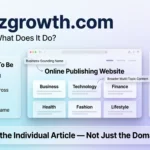
That confusion is understandable because TheSindi.com covers many unrelated subjects rather than focusing on one specialist field. Current third-party reviews describe it as a broad, multi-topic publishing website covering areas such as technology, finance, business, education, health, lifestyle, and law.
Quick Answer
TheSindi.com is a general-interest, multi-topic content website that publishes articles across several everyday subject areas. It can be useful when you want a simple introduction to a topic, but the value of an individual article depends on its author, date, evidence, and sources.
If you are reading about something that could affect your health, money, legal situation, security, or another important decision, treat the article as a starting point and verify important claims with appropriate authoritative sources.
Why You May Be Unsure About TheSindi.com
Maybe you reached TheSindi.com after clicking a search result and simply want to know what you have landed on.
Or perhaps you found an article about finance, health, technology, education, or another subject and wondered why the same website covers so many different areas.
You may also be asking a more practical question: “Can I use the information here, or should I check somewhere else first?”
Those are different questions, and they should not all be answered with one simple “yes” or “no.” A website can be useful for general explanations while an individual article may still need closer checking.
This guide therefore looks at TheSindi.com from the reader’s point of view: what the website appears to be, what you can find there, how to understand its broad subject coverage, how to identify the correct domain, and what basic safety checks make sense before you continue.
What Is TheSindi.com Actually Used For?
The simplest way to understand TheSindi.com is to think of it as a general information and publishing website, rather than a publication dedicated to one professional subject.
Current third-party reviews consistently describe the domain as a multi-niche or multi-topic site. Reported areas include technology, finance, business, education, health, lifestyle, and law, with some sources also identifying subjects such as travel, sports, automotive, and fashion.
That broad approach explains why two people can discover completely different parts of the same website.
For example:
- One reader might arrive through a technology article.
- Another might find a finance-related guide.
- Someone else could reach a health or lifestyle article.
- A student may encounter education content.
- Another visitor may discover an article related to business or law.
So if you were expecting TheSindi.com to behave like a single-topic magazine, its wide range of subjects can initially feel confusing.
What Does That Mean for a Reader?
It means you should judge the individual article as well as the website.
The fact that a site covers many topics does not automatically tell you whether every article is equally detailed, current, or authoritative.
A practical approach is to ask:
- Who wrote the article?
- When was it published or updated?
- Does it provide supporting sources?
- Are important claims specific enough to verify?
- Is the subject one where professional or official guidance matters?
That distinction is important because several current reviews describe TheSindi.com as useful for straightforward, introductory information while also noting limitations around sourcing or specialist authority.
In other words, “What is this website?” and “Can I rely on this particular article?” are not the same question.
What Topics and Content Does TheSindi.com Cover?

TheSindi.com has a deliberately broad content mix.
A current description of the site’s category structure identifies seven core areas: Technology, Finance, Business, Education, Health, Lifestyle, and Law. Other reviews report additional or older category labels, including travel, sports, automotive, and fashion.
Because website categories can change, it is better to view these as the site’s reported content areas rather than assume that every category will always have the same number of articles.
Technology
Technology content can help readers understand digital tools, software, online platforms, cybersecurity-related subjects, and other technology topics.
The important point is that the material is generally positioned for everyday readers rather than being treated as a specialist technical publication. Current reviews describe the technology coverage as broad and accessible.
Finance and Business
The finance and business areas cover practical subjects that may include money-related explanations, financial products, business topics, and other commercial questions.
This is one area where readers should pay attention to the difference between general information and personalized advice.
A simple explanation can help you understand a financial term or concept. It should not automatically be treated as enough evidence for a major financial decision.
Education
Educational content can be useful when someone needs a straightforward explanation, study-related information, or an introduction to an academic topic.
Again, the exact usefulness depends on the article itself. A basic explainer and a detailed academic resource are not interchangeable.
Health and Lifestyle
Health and lifestyle are especially important to separate mentally.
Lifestyle content may discuss everyday habits, personal care, routines, or general wellbeing. Health-related material can involve much more consequential questions.
If an article makes a medical claim, discusses treatment, medication, symptoms, or a health condition, the reader should look for stronger supporting evidence and appropriate professional or official sources before acting on it.
Law
Legal topics require a similar level of care.
A general article may help you understand a legal term or identify questions you need to ask. However, laws differ by location and can change over time, so an online explainer should not automatically be treated as legal advice for a specific situation.
Why the Wide Topic Range Matters
The advantage of a multi-topic website is convenience.
You can discover information about very different subjects without moving between dozens of specialized websites.
The trade-off is that breadth is not the same thing as specialist authority.
That is why the next question matters more than simply counting categories.
Is TheSindi.com a General Source or a Specialist Source?
If you are trying to decide how much weight to give a TheSindi.com article, this distinction is important.
The available descriptions consistently characterize TheSindi.com as a general-interest or multi-topic publishing website, rather than a publication dedicated exclusively to finance, medicine, law, technology, or another specialist discipline.
What Is a General Information Source?
A general source tries to make different subjects easier for ordinary readers to understand.
Its useful role can be:
- introducing an unfamiliar topic,
- explaining basic terminology,
- giving readers a starting point,
- helping someone identify what they need to research next,
- presenting a complicated idea in simpler language.
That can be genuinely useful.
What Is a Specialist Source?
A specialist source is focused on a particular field and may provide deeper expertise, professional authorship, primary evidence, formal guidance, or specialized research.
For example, a medical question may eventually require information from a recognized health authority or qualified healthcare professional.
A financial decision may require an official regulator, financial institution, or appropriately qualified adviser.
A legal issue may require current legislation, court information, an official government source, or a qualified legal professional.
The important point is not that a general website is automatically unreliable.
The point is that the level of evidence you need should match the importance of the decision you are making.
A Simple Way to Think About It
Imagine you read a TheSindi.com article explaining what a particular financial term means.
That may give you a useful starting point.
But if you are about to invest money because of something you read, the next step should be checking authoritative financial information.
The same principle applies to health and legal questions.
This approach lets you use general information without confusing it with professional or official advice.
How Can You Tell You Are on the Correct TheSindi.com Domain?
A surprisingly simple problem can cause confusion: domain identity.
The search query may appear as “thesindi com”, while the website address is written as thesindi.com.
Before trusting any website, make sure the address in your browser is actually the domain you intended to visit.
Check the Exact Spelling
Look carefully at:
thesindi.com
Do not assume that a similarly spelled domain belongs to the same publisher.
A different domain can belong to a completely different website, organization, or owner.
Be Careful With Lookalike Addresses
A familiar website name can be imitated through small spelling changes.
For example, a different extension, an extra character, a missing character, or a modified word can lead somewhere unrelated.
This does not mean every similar-looking domain is malicious. It simply means the domain should be checked rather than assumed.
Watch the Address After Clicking
Pay attention if clicking a link unexpectedly moves you to another domain.
A redirect is not automatically proof of a security problem because websites can legitimately use redirects. However, an unexpected destination is a good reason to stop and check the address before entering information or downloading anything.
Do Not Confuse Domain Identity With Content Accuracy
Finding the correct TheSindi.com domain answers one question:
“Am I looking at the website I intended to visit?”
It does not answer another question:
“Is every claim on this website accurate?”
Those need to be evaluated separately.
That distinction becomes especially important when you reach an article involving health, finance, law, security, or another high-impact subject.
Is TheSindi.com Safe to Browse?
Website safety is another question that should be handled carefully.
Current third-party reviews report that TheSindi.com is served over HTTPS and use that as one of several technical signals when discussing the site. One detailed review also reports Cloudflare infrastructure and standard legal pages.
Those observations can tell you something about the site’s technical setup, but they do not establish that every article is accurate or that every possible interaction with a website is risk-free.
What HTTPS Can Tell You
HTTPS generally means the connection between your browser and the website is encrypted.
You can usually recognize it through the lock indicator or https:// in the browser address.
That is useful because it helps protect data while it travels between your browser and the website.
What HTTPS Cannot Tell You
HTTPS does not prove that:
- every article is factually correct,
- the publisher is an expert in every subject,
- every recommendation is appropriate,
- the website has strong editorial standards,
- or a website is automatically trustworthy in every respect.
So the lock icon should be treated as a technical security signal, not a complete trust certificate.
What About Downloads?
Be more cautious if a website unexpectedly asks you to download a file.
You should know:
- what the file is,
- why you need it,
- where it came from,
- and whether downloading it is actually necessary.
A normal article should not require you to install an unknown program simply to read basic information.
What About Browser Notifications?
Some websites ask visitors to allow notifications.
You do not have to accept every permission request simply because it appears.
If you do not understand why a website needs a permission, the safer practical choice is to leave it disabled until you have a clear reason to enable it.
The Important Distinction
Think of website safety in two layers:
Technical safety:
Can you browse the domain without encountering an obvious technical problem?
Information reliability:
Can you reasonably support the claims made in a particular article?
Those are separate questions.
The first does not automatically answer the second.
That is why the next stage of this guide focuses on how to evaluate the actual information you are reading, rather than treating the website’s domain alone as proof of accuracy.
How Can You Judge the Reliability of a TheSindi.com Article?
Knowing what TheSindi.com is does not automatically tell you whether every article deserves the same level of trust.
A better approach is to evaluate the specific article you are reading.
Independent reviews of TheSindi.com have reported a broad multi-topic publishing model, while also raising questions about author transparency, editorial oversight, and the consistency of primary-source citations. Those are observations about the site’s visible structure, not proof that every individual article is inaccurate.
So instead of asking only, “Is TheSindi.com trustworthy?”, ask:
“What evidence supports this particular article?”
That question gives you something practical to work with.
Check the Author and Their Expertise
Start by looking for a byline.
An author name gives you a starting point, but a name alone does not establish expertise.
Ask:
- Is the author’s identity clear?
- Is there an author profile?
- Does the profile explain relevant experience?
- Is the topic one that normally requires specialist knowledge?
- Does the article make professional claims without identifying appropriate expertise?
One 2026 review reported that articles it examined were commonly attributed to a single visible byline and found limited information about subject-specific expertise.
That does not prove that the writing is wrong. It simply means you should place more weight on the evidence inside the article when the author’s qualifications are unclear.
Check the Publication or Update Date
A date matters because information can change.
This is especially important for:
- financial products,
- laws and regulations,
- technology,
- software,
- cybersecurity,
- health recommendations,
- prices,
- company policies.
An article that was accurate several years ago may no longer describe the current situation.
So before relying on a statement, ask:
“Is this information still current for the situation I am dealing with?”
Look for Sources and Evidence
A useful article should make important claims understandable and, where appropriate, verifiable.
Look for:
- links to official sources,
- research papers,
- government information,
- company documentation,
- named studies,
- primary data,
- clearly identified supporting evidence.
The absence of citations does not automatically prove an article is false. But when an article makes a serious factual claim and gives you no way to check it, independent verification becomes more important.
Several recent reviews specifically note that primary-source citation and editorial transparency are areas readers should examine carefully on TheSindi.com.
Check Editorial Information
Another useful signal is whether a publication explains how its content is produced.
For example, a reader may look for:
- an editorial policy,
- correction policy,
- named editors,
- fact-checking information,
- author guidelines,
- contact information,
- clear ownership information.
A lack of one of these features does not automatically make a website unreliable. Small independent publishers can have limited public information.
It simply means that the reader has less independent information about the publication process, so the article’s own evidence becomes more important.
Compare the Claim, Not Just the Website
Suppose a TheSindi.com article gives a simple explanation of a technical term.
You may only need to check whether the definition agrees with a reliable technical source.
Now suppose the article tells you:
“This financial product will save you a certain amount of money.”
That is a much more consequential claim.
Instead of asking whether the entire website is trustworthy, locate the specific claim and check it against the relevant official or specialist source.
This is a much more reliable way to evaluate online information.
When Should You Verify TheSindi.com Information Elsewhere?
Not every sentence on an information website requires an investigation.
If you are simply learning what a word means or getting a basic introduction to an unfamiliar topic, a general explainer may be enough to get started.
The need for additional verification increases when the information could affect an important decision.
Health Information
Be particularly careful with claims about:
- symptoms,
- diagnoses,
- medication,
- treatment,
- supplements,
- medical procedures,
- emergencies.
A general article can help you understand terminology, but health decisions should be checked against appropriate medical or official health sources.
Financial Information
Verify information involving:
- loans,
- investments,
- interest rates,
- taxes,
- banking rules,
- eligibility requirements,
- financial products,
- potential returns.
Financial rules and products can change, and individual circumstances matter.
Legal Information
Legal content deserves additional checking because laws depend on jurisdiction and can change.
If an article explains a legal requirement, ask:
“Which country, state, or jurisdiction does this apply to?”
Then check the relevant government, court, legislation, or qualified legal source.
Security and Technology
Technology changes quickly.
If an article discusses:
- software features,
- cybersecurity threats,
- device specifications,
- privacy policies,
- platform rules,
- security vulnerabilities,
check the current documentation or official source when the information matters to your decision.
A Simple Rule
Use TheSindi.com or any similar general-interest website to understand a topic.
Use an authoritative or specialist source to confirm an important claim before acting on it.
That distinction is more useful than trying to give an entire website one permanent “trust” label.
How to Evaluate a TheSindi.com Article in Two Minutes
You do not need a complicated investigation every time you open an article.
A quick seven-step check can often tell you whether you should continue reading, verify the information, or look for a stronger source.
1. Confirm the Domain
First, make sure you are actually reading:
thesindi.com
Check the browser address before entering information or following unexpected instructions.
2. Read the Headline Carefully
Ask what the article is actually claiming.
A headline can sound more certain than the information underneath it.
Do not assume that a strong headline automatically means there is strong evidence behind it.
3. Check the Date
Look for the publication or update date.
If the subject changes frequently, an old article may need extra checking even if the basic explanation still sounds reasonable.
4. Identify the Author
Look for the byline and any available author information.
If the subject is highly specialized and the author’s relevant expertise is unclear, rely more heavily on independent supporting evidence.
5. Find the Evidence
Scan the article for specific sources.
Ask:
“Where did this important claim come from?”
If you can follow the claim to an official document, primary source, research paper, or recognized specialist source, you have something concrete to evaluate.
6. Cross-Check Important Claims
You do not need to verify every ordinary sentence.
Focus on claims that could change your decision.
For example:
General claim:
“This type of account allows customers to save money.”
Important claim:
“This particular account currently offers a specific interest rate under certain conditions.”
The second claim needs current, direct confirmation.
7. Decide What Role the Article Should Play
After those checks, classify the article mentally:
Starting point — useful for learning the basics.
Research aid — useful alongside other sources.
Needs verification — important claims require independent checking.
Not sufficient for the decision — the topic requires an official or qualified specialist source.
This is much more practical than asking whether an entire domain is simply “good” or “bad.”
What Can TheSindi.com Be Useful For?
The broad nature of TheSindi.com can make it useful for topic discovery and basic orientation.
For example, imagine you see the term “compound interest” and do not understand what it means.
A simple explainer can help you learn:
- what the term means,
- why it matters,
- which basic concepts are involved,
- and what questions you should research next.
That is a reasonable use of general information content.
The situation changes if you are about to choose a specific investment because of the article.
In that case, you would move from:
Learn the concept → Check current facts → Compare official information → Make your decision
rather than:
Read one article → Act immediately
The same pattern works across other subjects.
What Should You Do If an Article Gives You Conflicting Information?
Sometimes the problem is not that one website is obviously wrong.
You may simply find different answers on different websites.
When that happens, do not choose the answer that sounds most confident.
Instead, compare:
- Date — Which information is newer?
- Source — Who originally provided the information?
- Evidence — Does the article show where its claim came from?
- Authority — Is there an official or specialist source?
- Context — Are both sources talking about the same country, product, version, or situation?
This is especially important for laws, financial rules, software features, medical guidance, and rapidly changing technology.
A disagreement becomes much easier to understand when you identify exactly which claim differs and why.
What Does the TheSindi.com Search Really Tell You?
If you searched “thesindi com”, the most useful takeaway is not simply whether the website has a particular label.
The search tells you that you are probably trying to identify an unfamiliar information source and understand how much weight to give its content.
TheSindi.com is consistently described by current third-party sources as a broad, multi-topic publishing website rather than a specialist publication.
That means the sensible approach is straightforward:
Use it to discover and understand information, then match your level of verification to the importance of the claim.
A basic definition may only need a quick comparison.
A medical, financial, legal, or security-related decision deserves much stronger confirmation.
What Else Do People Ask About TheSindi.com?
Does TheSindi.com focus on one specific subject?
No. Current descriptions consistently characterize it as a multi-topic website covering areas such as technology, finance, business, education, health, lifestyle, and law. Some sources also report additional categories appearing in older or broader site structures.
Can a TheSindi.com article change over time?
Yes. Online articles can be updated, replaced, or become outdated as their subject changes. This is why the publication or update date matters when you are researching time-sensitive information.
Why should I compare a TheSindi.com article with another source?
Because comparison helps you check whether an important claim is supported elsewhere. This is especially useful when the article discusses money, health, law, security, or another subject where an incorrect detail could have meaningful consequences.
Does a general information website need to be a specialist publication to be useful?
No. A general website can be useful for introductions, definitions, topic discovery, and basic explanations. The key is matching the source to the task. Introductory reading and professional decision-making require different levels of evidence.
What should I do if a TheSindi.com article has no clear supporting source?
Treat the unsupported claim as something that needs verification rather than automatically accepting or rejecting it. Search for the original information through an official organization, primary source, recognized research source, or appropriate specialist.
Final Takeaway
If thesindi com brought you here because you were unsure what kind of website you had found, the main point is simple: TheSindi.com is described by current third-party sources as a broad, multi-topic information website, not a publication limited to one specialist field.
That broad coverage can make it useful for discovering a topic or getting a plain-language introduction. But the website’s name alone cannot tell you whether a particular claim is accurate, current, or suitable for an important decision.
The practical solution is to evaluate the article in front of you.
Check the domain. Look at the date and author. Find the supporting evidence. Compare important claims with authoritative sources. And when the subject involves health, finance, law, security, or another high-stakes decision, do not stop at a general online explanation.
In short:
Identify the website. Understand the article. Verify the important claims. Then decide what information is appropriate for your situation.
That approach gives you a much clearer answer than simply asking whether TheSindi.com is “good” or “bad.”