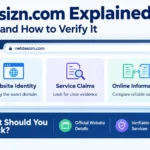


Magfusehub com Explained: What It Is and How to Use It

Have you come across Magfusehub.com and wondered what the website actually does? Its unfamiliar name can make it difficult to know whether you are looking at an online magazine, a digital tool, or something else.
Magfusehub.com presents itself as a multi-category digital publishing website. It publishes articles on subjects ranging from technology and business to finance, health, travel, and lifestyle. However, understanding its purpose is only the first step. You also need to know how its content is organized and how to assess the information you find there.
If you are confused by different descriptions of Magfusehub, you are not alone. Other websites use similar names, and third-party descriptions do not always match the actual site. This guide explains what Magfusehub.com publishes, how to distinguish it from similarly named websites, and what to check before relying on its content.
Quick Answer: What Is Magfusehub.com?
Magfusehub.com is a multi-category online publishing website that presents articles and informational content across several subjects. Its homepage describes coverage that includes technology, automotive, business, finance, health, fashion, lifestyle, travel, law, pets, and digital trends.
The website is best understood as a general-interest publication rather than a specialist website devoted to one topic. You can explore its public articles and category pages to see what it covers.
One important distinction remains: a website’s stated purpose does not automatically establish the accuracy of everything it publishes. If an article discusses medical, financial, legal, or other high-stakes matters, check its evidence and compare important claims with authoritative sources.
What Is Magfusehub.com?
Magfusehub.com describes itself as a digital media and multi-category publishing platform. Its stated purpose is to make information available to readers interested in different industries, everyday topics, and online trends. The website’s About page provides a similar description of its publishing mission.
In practical terms, this means you may encounter different types of articles during the same visit. One page might discuss technology, while another explores personal finance, travel, business, or pet care. The website brings these subjects together instead of focusing exclusively on one specialized field.
Is Magfusehub.com a Website, App, or Online Tool?
Based on the public pages reviewed, Magfusehub.com primarily presents itself as an online publishing website. Its homepage displays articles, while its category pages organize content by subject.
This distinction matters because an unfamiliar domain name can sometimes make a reader expect a service or application.
Before assuming that Magfusehub offers a particular tool, app, or account feature, check whether that feature actually appears on the exact website. Do not rely on a third-party description alone.
For example, if you searched for Magfusehub because you expected a downloadable application, look for an official product page and clear installation instructions. If the website instead directs you to informational articles, treat it as a publishing resource rather than assuming it provides software.
The key point: Identify what the live website actually offers before deciding how you want to use it.
What Can You Find on Magfusehub.com?
Magfusehub.com covers multiple subjects, so the content you encounter depends on the category or article you open. Its homepage and category archives show a mixture of informational articles, practical guides, and discussions about different topics.
Here is how to approach that broad selection without getting lost in unrelated information.
Which Topics and Types of Content Does It Cover?
The website’s published categories include several areas of general interest.
- Technology: Articles about digital developments and technology-related subjects.
- Business: Content concerning business topics, companies, and professional interests.
- Finance: Articles about financial topics, saving, and related subjects.
- Health: Informational content concerning health and wellness.
- Lifestyle and fashion: Articles related to everyday interests, personal style, and lifestyle topics.
- Travel and automotive: Content covering travel-related interests and vehicles.
- Pets: Articles about pet care and related subjects.
- Education, law, and digital trends: Additional topics that appear across the site’s broader publishing categories.
These examples describe the website’s stated and visible content coverage, not a guarantee that every category contains comprehensive or professionally reviewed information. The actual selection may change as the site publishes new articles.
So, what does this mean for you as a reader?
If you want a general introduction to a subject, an article may help you understand the basics or identify questions worth researching further. However, do not assume that a broad-interest publication provides the same depth as a specialist source.
For instance, a general article about investing might explain a financial concept, but it should not replace independent research into an investment decision. The same principle applies to health, legal, and technical subjects.
How Can You Find Relevant Articles?
If you visit Magfusehub.com looking for a specific answer, start with the subject rather than browsing every category.
Follow these steps:
- Open the exact domain:
magfusehub.com. - Look at the homepage and available category links.
- Choose the category that matches your question.
- Open an article with a relevant title.
- Check its publication date and author information.
- Review the article for supporting sources and specific evidence.
- Compare important claims with reliable sources outside the website.
This approach helps you determine whether an article addresses your actual question instead of merely mentioning the same topic.
Suppose you find an article about a financial product. Its title might match your search, but that alone does not establish that the article explains the product accurately. Read the relevant section, check its supporting evidence, and consult the provider’s official documentation when necessary.
You can use the same method for technology guides, health explainers, and other subjects.
A useful rule: Treat search relevance and factual reliability as two separate questions. An article can match your search perfectly while still needing additional verification.
Why Do Some Sources Describe Magfusehub Differently?
If you search for Magfusehub.com, you may encounter descriptions that do not agree about what the name represents. One source may describe a publishing website, while another may associate a similar name with a different service or platform.
This creates a straightforward problem: how can you tell which description applies to the website you intended to visit?
Start by checking the exact domain rather than relying on the name alone. The website at magfusehub.com presents itself as a multi-category publishing platform. A separate domain, magfusehubs.com, has its own online description, which refers to different platform features. Similar spelling does not establish common ownership or prove that two websites offer the same services.
How Can You Distinguish Magfusehub.com From Similar Domains?
When two website names look almost identical, a small spelling difference can take you to a different destination. Checking the complete address helps prevent confusion.
Use this quick comparison method:
- Check the full domain: Confirm every word and letter before opening a page.
- Inspect the address bar: Make sure the page you are reading belongs to the domain you intended to visit.
- Read the website’s own description: Check its About page and the purpose stated on its homepage.
- Review its actual features: Do not assume a service exists simply because another website with a similar name advertises it.
- Verify contact and policy pages: Check whether the information matches the exact website you are evaluating.
- Avoid unsupported ownership assumptions: Similar names, designs, or topics do not prove that two sites belong to the same person or company.
For example, if one search result describes Magfusehub as a publishing website but another describes a similarly named platform as an all-in-one service, do not combine those descriptions into one profile. Open each domain separately and evaluate its public information.
Also, remember that a professional-looking design does not prove that a website is trustworthy. Likewise, an unfamiliar name alone does not establish that a website is fraudulent. Look at the available evidence instead of making a decision based only on appearance or spelling.
Once you have identified the correct domain, the next question is whether the information it publishes is useful and adequately supported. That requires a separate check of individual articles, their authors, their sources, and their publication dates.
How Can You Evaluate Information Published on Magfusehub.com?
Finding an article that matches your search is a good starting point, but it does not automatically make the information reliable. Before acting on advice from Magfusehub.com, examine how the article was written, what evidence supports its claims, and whether the information remains current.
You do not need to investigate every sentence in a general-interest article. Focus on claims that could affect your health, finances, legal decisions, privacy, or security.
Who Wrote the Article?
An identifiable author can help you understand who created the content and whether their background fits the subject.
When reviewing an article, look for:
- An author name: Check whether the article identifies its writer.
- A useful author biography: See whether the biography explains relevant experience or qualifications.
- Relevant expertise: Determine whether the writer has a background appropriate to the topic.
- Editorial information: Look for details about the website’s editorial standards or review process, if provided.
- Accountability: Check whether the website offers a reasonable way to contact its team about errors.
An author name alone does not prove expertise. Similarly, an author biography should not be treated as independent evidence of every qualification it mentions.
For example, an article explaining a basic technology term may not require specialist credentials. An article recommending a medical treatment, however, deserves closer scrutiny of its evidence and relevant professional review.
If you cannot establish an author’s qualifications, consider that a limitation rather than proof that the article is false.
Does the Article Support Its Claims With Reliable Sources?
An article becomes more useful when readers can check the evidence behind its important statements.
Look for links to original research, official documentation, recognized institutions, or other sources that directly support the claims being made.
Use these questions to evaluate the evidence:
- Does the article link to sources for important factual claims?
- Do those sources actually support the statements?
- Are the sources authoritative for the subject?
- Can you find the original information rather than relying on another site’s summary?
- Do independent, credible sources report consistent findings?
Be especially careful with specific statistics, health recommendations, financial claims, and statements about laws or regulations.
For example, an article might claim that a particular financial product offers a certain benefit. Instead of accepting the statement at face value, consult the provider’s official documentation and review any relevant limitations.
A source link is not enough by itself. A webpage can cite a legitimate organization while misrepresenting what that organization actually says.
The practical test: Follow the evidence back to its source and confirm that it supports the article’s conclusion.
Is the Information Current and Clearly Disclosed?
Some information remains useful for years, while other information can become outdated quickly.
A basic explanation of a long-established concept may not need frequent updates. Information about software features, financial products, health guidance, or current regulations may require more recent evidence.
Before relying on an article, check three things.
Publication date: Look for when the article first appeared, if that information is available.
Update information: Check whether the page identifies meaningful revisions. A changed date alone does not prove that someone reviewed the content carefully.
Relevant disclosures: If the article discusses a product or service, look for disclosures about sponsorships, affiliate relationships, or other relevant commercial interests where applicable.
These checks help you understand the context behind the information.
An article published recently can still contain errors. An older article can still explain an established concept accurately. Judge the date alongside the quality of the evidence, not as a substitute for it.
If the article makes a claim that could influence an important decision, compare it with current primary sources before acting.
Is Magfusehub.com Safe to Browse?
Website safety and information accuracy are different issues. A website may display ordinary informational content while an individual link, download, advertisement, or external destination presents a separate risk.
The available website description does not, by itself, establish that every page and linked resource is safe. Likewise, the domain’s unfamiliar name is not enough to conclude that it is dangerous.
A sensible approach is to use ordinary browsing precautions and evaluate any request for sensitive information carefully.
What Should You Check Before Clicking Links or Downloading Files?
Before opening an unfamiliar link or downloading a file, pause and check where it leads.
1. Inspect the destination. Hover over a link on a desktop, or use your browser’s link-preview feature when available. Check whether the destination matches the stated purpose.
2. Watch for unexpected redirects. If clicking an article link sends you to an unrelated page, avoid continuing until you understand why.
3. Treat unexpected downloads cautiously. A general information article should not automatically require you to install unfamiliar software or open an unexpected executable file.
4. Keep your browser and security software updated. Updates help protect your device against known security vulnerabilities.
5. Do not ignore browser warnings. If your browser identifies a potentially dangerous page or download, do not bypass the warning simply to access the content.
6. Be careful with deceptive prompts. Messages claiming that your device is infected or that you must install a special tool immediately deserve extra scrutiny.
These precautions apply to unfamiliar websites generally, not just Magfusehub.com.
Also, the presence of HTTPS and a padlock icon indicates an encrypted connection, but it does not guarantee that a website is honest or that its content is accurate.
If a page behaves unexpectedly, close it and return to the website’s main address rather than following additional prompts.
What Should You Consider Before Sharing Personal Information?
Reading an article usually requires less personal information than registering for a service or making a purchase. If a website asks for your details, consider whether the request makes sense for the task you want to complete.
Before submitting information, ask yourself:
- Why does the website need these details?
- Is the requested information necessary?
- Can you understand the site’s privacy policy?
- Is there a clear explanation of how the information will be used?
- Does the page ask for passwords, payment details, or sensitive information without a convincing reason?
Avoid sharing unnecessary personal information simply to access general information.
Never provide your email password, banking password, or one-time verification code in response to an unexpected request. Be especially cautious if a page pressures you to act immediately or promises an unrealistic benefit in exchange for personal details.
If a transaction or account is involved, verify the organization and the destination independently before proceeding.
Important distinction: These are precautionary checks, not a claim that Magfusehub.com has engaged in unsafe behavior. A specific security concern requires specific evidence.
How Can You Verify a Magfusehub.com Article Step by Step?
If you want a simple way to decide whether an article is worth using, follow this short checklist.
Step 1: Confirm the Exact Website
Check the address bar and make sure the article belongs to magfusehub.com. Do not assume that a similarly named domain is connected to it.
Step 2: Identify the Article’s Main Claim
Ask what the article wants you to understand or believe. Separate its central claim from background information, examples, and opinions.
Step 3: Check the Author and Date
Look for the writer’s identity, relevant qualifications, publication date, and any available update information.
Missing details do not automatically make an article inaccurate, but they can limit your ability to evaluate it.
Step 4: Follow the Evidence
Open the sources linked in the article. Check whether they support the important statements and whether they come from appropriate authorities.
If the article makes a significant claim without evidence, search for independent confirmation.
Step 5: Compare Important Information
For health questions, consult reputable health authorities. For legal questions, look for current legislation or official government guidance. For financial products, review original provider documents and relevant regulatory information.
Use sources suited to the question rather than assuming that one source is authoritative for every subject.
Step 6: Decide How Much to Rely on It
After completing these checks, decide whether the article is suitable for your purpose.
- Useful for general learning: The explanation is clear and consistent with reliable sources.
- Needs further checking: Important claims lack evidence or remain unclear.
- Not suitable for an important decision: The information conflicts with authoritative sources or contains serious unsupported claims.
You do not have to classify an entire website as either trustworthy or untrustworthy based on one article. Evaluate the specific information you need.
If you find an apparent error, compare the claim with reliable evidence before drawing a conclusion. You can then contact the website through any available official contact channel and explain the issue clearly.
FAQs
Does an Article’s Publication Date Prove When Magfusehub.com Started?
No. An article’s publication date only indicates when that particular article was published, assuming the date is accurate. It does not establish the website’s launch date.
To investigate when a website began operating, you can examine historical domain-registration records, archived versions of the website, and other reliable historical evidence. Each source has limitations, so avoid treating one date as conclusive proof without context.
What Should You Do if a Magfusehub.com Article Contradicts an Official Source?
First, identify the exact statement that conflicts with the official information. Then check whether both sources discuss the same subject, jurisdiction, time period, and circumstances.
For example, a legal article may describe a general rule while an official government page explains a more recent change. In that situation, the difference may reflect outdated information or a missing qualification.
Prefer current primary sources for matters they directly govern. If the contradiction remains unresolved, do not rely on the disputed claim for an important decision until you can verify it.
Can You Establish Website Ownership From Its Domain Name Alone?
No. A domain name identifies an internet address, not necessarily the person or company operating it.
Ownership research may involve domain-registration records, the website’s legal disclosures, company information, and other independent evidence. Privacy-protected registration details may prevent you from identifying the registrant publicly.
Similarly, two websites with similar names are not necessarily owned by the same organization. You need supporting evidence before making that connection.
How Can You Report a Factual Error on Magfusehub.com?
Start by locating an official contact page or another communication channel published on the website, if one is available.
Explain which article contains the issue, identify the specific statement, and provide a reliable source that supports your correction. Include the article’s title and address so the website’s team can locate it easily.
Keep your message factual and concise. If the website does not provide a clear contact channel or does not respond, you can still use reliable sources to guide your own decisions.
Conclusion
Magfusehub.com presents itself as a multi-category publishing website covering subjects such as technology, business, finance, health, travel, and lifestyle. If you are looking for general information, its articles may offer a starting point for exploring a topic.
The important part is knowing what an article can and cannot establish. Confirm the exact domain, examine the article’s evidence, check whether its information is current, and use appropriate security precautions when following links or sharing personal details.
Do not assume that every article is reliable simply because it appears on the same website. Equally, do not label a site unsafe without evidence. Evaluate the specific page, claim, or action that matters to you.
The bottom line: Use Magfusehub.com as an information source to evaluate, not as an automatic substitute for independent verification. When a claim could affect your health, money, legal position, or online security, confirm it through relevant, authoritative sources before acting.