

Increditools: What It Is, How It Works & Review Guide

If you searched for Increditools, you may be trying to understand what the website actually is, what kind of tools it covers, or whether you can rely on the information it publishes. The name can also be confusing because search results may point to different Increditools domains.
This guide explains the platform in simple terms, shows you how to distinguish the relevant domain, and helps you understand what Increditools does before you rely on a review or recommendation.
If your real question is “What is Increditools, and can I safely use its information when researching a tool?”, you are in the right place. We will separate the basic facts from claims that need verification and show you what to check before making an important decision.
What Is Increditools?
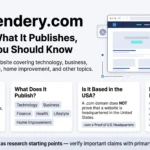
Increditools is an online resource associated with reviews, comparisons, and information about digital tools and online services. The currently accessible Increditools.org site describes itself as a technology-focused platform covering software, online services, SEO tools, social-media tools, productivity resources, cybersecurity, and other digital services.
The important point is that Increditools should not automatically be confused with the individual software products it discusses. A review website can describe or compare a service without being the company that develops or operates that service.
This distinction matters if you arrive at an Increditools article while researching a product you may eventually pay for. The review can help you discover or compare an option, but the actual provider’s website remains the appropriate place to confirm current pricing, features, terms, and other important details.
In other words, think of Increditools primarily as a research resource, rather than assuming that every tool mentioned on the site belongs to Increditools itself.
What Does Increditools Actually Do?
The practical purpose of a platform such as Increditools is to make online-tool research easier.
Instead of searching separately for every software product, a reader can use review and comparison content to learn:
- what a particular tool is designed to do,
- which features it offers,
- what type of user it may suit,
- how it compares with alternatives,
- and what factors are worth checking before signing up.
This can be useful when you are still in the research stage and do not yet know which product is appropriate for your needs.
However, there is an important difference between finding a product through a review site and verifying that product before purchasing it.
For example, imagine you need an SEO tool. An Increditools article may help you discover several options and understand the differences between them. Before paying for one, you should still visit the provider’s official website to confirm the current price, features, subscription terms, and other details.
That two-step approach is more reliable than treating one review as the final source of truth.
Are Increditools.com and Increditools.org the Same Website?
This is an important point to check before researching the platform.
Search results associated with the name Increditools include both increditools.com and increditools.org. They should not be treated as the same website simply because their names are similar.
The .com domain has a separate Trustpilot profile, while the currently accessible .org website presents itself as a technology review and information platform.
Because similarly named domains can create confusion, always look at the complete URL in your browser before assuming that information from one domain belongs to another.
Why the Exact Domain Matters
A small difference in a domain name can lead you to an entirely different website.
For example:
increditools.comincreditools.org
look closely related, but the domain extensions are different.
That means you should not combine reviews, company information, ownership details, or other claims about the two sites unless a reliable source establishes that they are connected.
This is especially important when you are about to:
- create an account,
- provide personal information,
- make a payment,
- download software,
- or rely on information presented as an official statement.
The safest habit is simple: check the exact domain before assuming you are dealing with the same entity.
How to Check Which Increditools Website You Are Using
You can verify the domain in a few seconds:
- Look at the browser address bar.
- Read the complete domain name rather than only the website’s logo or page title.
- Check whether the address ends in
.com,.org, or another extension. - Do not assume that similarly named websites have the same owner or provide the same service.
- For important claims, check information directly on the relevant website or another reliable source.
This small check can prevent a surprisingly common research mistake: attributing information from one domain to another.
What Types of Tools Does Increditools Cover?
The current Increditools.org site describes coverage across several areas of digital technology and online services, including SEO software, social-media tools, productivity resources, cybersecurity products, and other software and online services.
The exact categories and individual products can change over time, so it is better to treat the website’s current content as the source for what it covers rather than assuming that an old third-party article contains a complete list.
SEO and Marketing Tools
These can include services designed to help with areas such as search optimization, digital marketing, analytics, or online growth.
If you are researching one of these products, the useful question is not simply whether Increditools mentions it. You should also check what the official provider currently says about its features and pricing.
Social-Media Tools
Increditools-related search results also include information about social-media growth and management tools.
These products can serve very different purposes, so readers should look beyond a general recommendation and determine exactly what the tool does and whether its methods comply with the relevant social platform’s rules.
Productivity and Online Software
The platform also describes coverage of productivity and other online software.
For these products, practical factors such as supported platforms, available features, pricing plans, data handling, and cancellation terms may be more important than a simple review score.
Cybersecurity and Other Digital Services
Technology review content can also cover security-related products and other online services.
These topics deserve additional care because security, privacy, and data-handling claims can change as products are updated. For an important security decision, verify the provider’s current documentation rather than relying entirely on a third-party review.
How Does Increditools Work and Make Money?
A review platform generally works by publishing information that helps readers discover and compare third-party products or services.
A reader may:
Find a review → Learn about a product → Compare options → Visit the provider → Decide whether to sign up
The important distinction is that the website publishing the review may not be the same business that ultimately provides the software.
Some review websites also use affiliate or referral relationships, where a publisher may receive compensation when a reader follows a qualifying link or completes an action with a third-party provider. The existence of such a relationship does not, by itself, prove that a review is accurate or inaccurate.
What matters is how transparently the relationship is disclosed and whether the article provides enough useful information for readers to evaluate the recommendation independently.
Does Increditools Sell the Tools It Reviews?
Do not automatically assume that a product mentioned in an Increditools article is an Increditools product.
When researching a particular service, identify the actual provider first. The provider’s official website should be used to confirm details such as:
- current pricing,
- available plans,
- product features,
- supported platforms,
- refund policies,
- cancellation conditions,
- privacy information,
- and terms of service.
This distinction becomes especially important when an article links directly to an external service.
How Affiliate or Referral Links May Work
Affiliate marketing is common across online review and comparison websites.
A simplified example is:
Review website → Referral link → Third-party provider → Possible commission
If compensation is involved, the reader should understand that the existence of a referral relationship is different from proof that a product is either good or bad.
A more useful approach is to evaluate the review itself:
- Are the claims specific?
- Are important details supported?
- Is the information current?
- Does the article acknowledge limitations?
- Can key claims be confirmed on the provider’s official website?
These questions give you a better basis for evaluating a recommendation than simply assuming that an affiliate link makes the content unreliable.
Can You Trust an Increditools Review?
A review can be useful without being a substitute for verification. The safest way to evaluate an Increditools article is to look at how the information is presented and supported, rather than relying on a simple trust label.
If a review makes a strong claim about a tool’s performance, price, features, security, or results, ask what evidence supports that claim and whether the information can be confirmed elsewhere.
Check Who Wrote the Review
Start by looking for the author’s name and any available information about their role or expertise.
Author information does not automatically prove that an article is correct, but it gives you useful context. A clearly attributed article is easier to evaluate than content with no identifiable author or editorial information.
For technical topics, also consider whether the writer provides enough detail to explain how they reached their conclusions.
Check the Publication or Update Date
Software and online services can change quickly.
A tool may introduce new features, remove old ones, change its pricing, update its policies, or stop offering a particular service. That means an older review can contain information that was once accurate but is no longer current.
Before relying on a review, check:
- when it was published,
- whether it has been updated,
- whether the information refers to the current version of the product,
- and whether important details match the provider’s current website.
This is particularly important for pricing, product features, subscriptions, and platform policies.
Look for Evidence Behind Product Claims
Be cautious when an article makes broad claims without explaining how they were established.
For example, statements such as “the fastest,” “the safest,” “guaranteed results,” or “the best tool” need more context than a simple assertion.
Useful evidence may include:
- specific product features,
- documented limitations,
- comparisons based on identifiable criteria,
- links to supporting information,
- official documentation,
- or clearly explained testing methods.
The more significant the claim, the more useful it is to look for evidence supporting it.
Compare Important Details With the Official Provider
Third-party reviews are useful for discovery, but the provider’s official website is usually the better place to confirm current commercial and technical information.
If an Increditools article gives you a price, feature list, subscription condition, or product specification, compare it with the provider’s current information.
Pay particular attention to details that can affect your decision:
- pricing,
- free trials,
- plan limitations,
- supported features,
- refund rules,
- cancellation terms,
- privacy policies,
- and service availability.
If the two sources disagree, do not automatically assume the review is current. Check the dates and use the provider’s latest official documentation for information that directly concerns your purchase or account.
Check Independent User Feedback
Reviews published on a single website give you only one perspective.
For an important purchase, you can also look at independent customer feedback and other reputable sources. This can help identify recurring issues that may not be obvious from a promotional or comparison article.
However, individual reviews should also be interpreted carefully. One positive or negative experience does not necessarily represent every user’s experience.
The goal is to look for patterns and corroboration, not to replace one source with another without evaluating either one.
How to Verify an Increditools Recommendation Before Buying
If an Increditools article introduces you to a tool you are considering, use the article as a starting point rather than the final verification step.
A simple process can reduce the risk of making a decision based on outdated information.
Step 1 — Identify the Actual Provider
First determine who actually operates the product.
Do not assume that the website reviewing a tool is also the company selling it. Follow the product information to the provider’s official website and confirm the company or service name.
This is especially important when multiple services have similar names.
Step 2 — Confirm Current Pricing and Features
Pricing pages and product features can change.
Before subscribing, check the provider’s current pricing page and compare it with the information you read in the review.
Look for:
- monthly versus annual pricing,
- free trials,
- usage limits,
- plan restrictions,
- additional charges,
- included features,
- and cancellation requirements.
If an article and the official website show different prices, treat the official current pricing information as the one that matters for a purchase.
Step 3 — Check Privacy and Security Information
If a tool requires an account, personal information, social-media access, business data, or other sensitive information, review its privacy and security documentation before connecting anything.
Check what information the service collects, how it says that information is used, and what permissions the product requires.
For security-sensitive products, do not base the decision on a short third-party review alone.
Step 4 — Review Cancellation and Refund Terms
A low introductory price or free trial does not tell you everything about a subscription.
Before entering payment information, find out:
- how cancellation works,
- whether the subscription renews automatically,
- whether refunds are available,
- what conditions apply,
- and whether cancellation must be completed before a specific renewal date.
These details can prevent an unexpected charge later.
Step 5 — Check the Platform’s Rules
This step is especially relevant for tools that automate activity on social networks, search platforms, advertising systems, or other third-party services.
A tool may advertise a particular capability, but that does not automatically mean the activity is permitted by the platform being used.
Check the relevant platform’s current rules before relying on automation, engagement, scraping, account management, or similar services.
Step 6 — Test Before Committing to a Long Subscription
If a legitimate trial or low-risk option is available, consider testing the product before committing to a long-term plan.
During the test, check whether:
- the advertised features actually work for your use case,
- the interface is usable,
- the service performs as expected,
- customer support is responsive,
- and the limitations are acceptable.
This gives you information that a written review alone cannot provide.
Is Increditools Safe to Visit?
Website safety and information reliability are two different questions.
A website can be technically safe to visit while some of its content may still need independent verification. Likewise, a useful review platform does not automatically make every third-party service it discusses safe or appropriate for every user.
When visiting any unfamiliar website, use basic precautions:
- check the exact domain,
- look for HTTPS in the browser,
- avoid downloading unexpected files,
- do not enter sensitive information unnecessarily,
- verify payment pages before entering financial details,
- and investigate unfamiliar services before creating an account.
If you are considering a product mentioned in an Increditools article, also investigate the actual provider. The safety of the review website and the safety of the recommended service are separate issues.
When Should You Use Increditools—and When Should You Look Elsewhere?
Increditools can be useful when you are at the discovery and comparison stage of researching digital tools.
It can help you understand what a product does, identify alternatives, and decide which services deserve closer investigation.
The important part is knowing when to move beyond the review.
Use Increditools for Initial Research
A review or comparison article can help you:
- discover unfamiliar tools,
- understand basic differences,
- identify features worth comparing,
- find potential alternatives,
- and create a shortlist for further research.
This can save time when you are dealing with a large number of similar software products.
Use Official and Independent Sources for Final Verification
Before making an important purchase or giving a service access to valuable information, verify the details independently.
Use the provider’s official website for current:
- pricing,
- features,
- policies,
- subscription conditions,
- and technical documentation.
For important decisions, also consider independent user feedback and other reliable sources.
The practical approach is therefore:
Use review content to discover → compare the options → verify important claims → check the actual provider → then decide.
Frequently Asked Questions About Increditools
Is Increditools a software company?
Increditools is presented primarily as a resource for information, reviews, and comparisons of digital tools and online services. A product mentioned in an Increditools article should not automatically be assumed to be developed or operated by Increditools.
Can an Increditools review contain affiliate links?
Review websites can use affiliate or referral arrangements, depending on the site and its commercial relationships. An affiliate relationship alone does not establish whether a recommendation is accurate. Readers should evaluate the evidence, disclosures, and supporting information.
Why should I check the exact Increditools domain?
Because similarly named domains can represent different websites. Current search results include both Increditools.com and Increditools.org, so checking the complete URL helps prevent information from one domain being incorrectly attributed to another.
Should I rely on one Increditools review before purchasing software?
For a significant purchase, it is better to use a review as one source of research rather than the only source. Confirm current pricing, features, policies, and other important details directly with the actual provider and use independent information where appropriate.
Conclusion
If you searched for Increditools because you wanted to know what it is or whether you can rely on its recommendations, the most useful answer is not a simple trust or distrust label.
Start by identifying the exact Increditools domain you are viewing. Then understand whether the page is describing Increditools itself or a third-party product. When evaluating a review, check its author, date, supporting evidence, and important claims. Before paying for a recommended tool, verify the current information directly with the actual provider.
The practical takeaway is simple: use Increditools to help with research and comparison, but independently verify important information before you subscribe, pay, or give a third-party service access to your data.